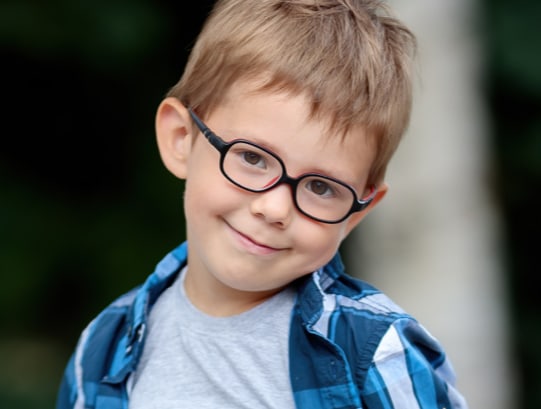
Myopia, which you may know as nearsightedness, often starts during the school years. It happens when the eye grows a little too long from front to back. Light then focuses in front of the retina instead of directly on it, so faraway things look blurry while close-up things stay clear.
Parents often ask us whether their child will outgrow it. Myopia can’t be cured or reversed, since the extra length in the eye doesn’t go away. Treatment can slow how quickly myopia progresses, though, and a an annual eye exam can show how your child’s eyes changed over the summer.
Common Signs to Watch For
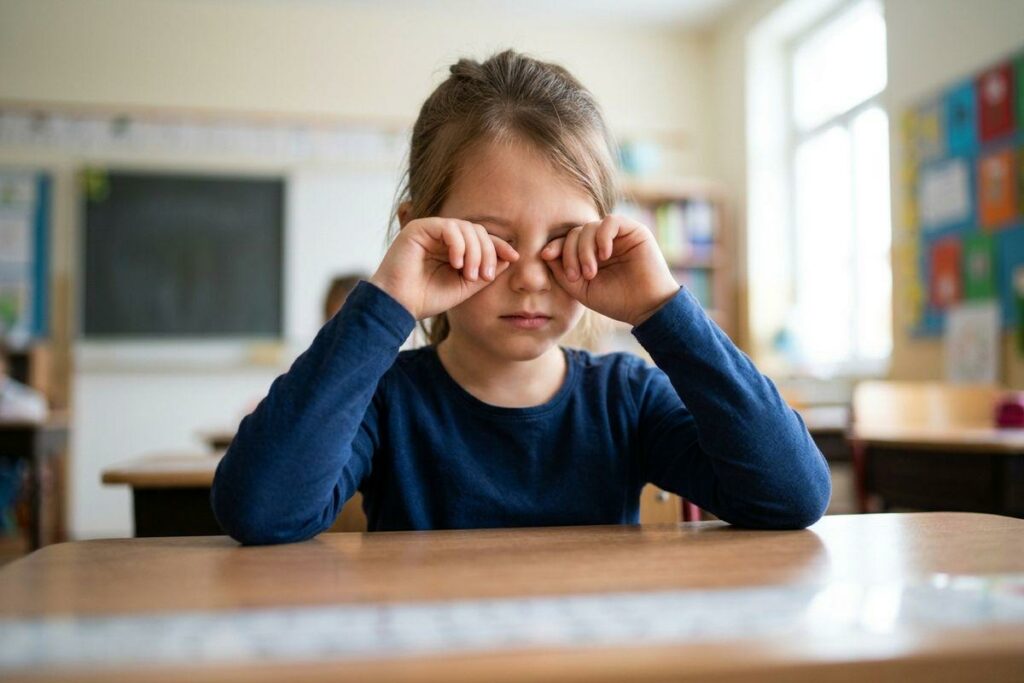
Kids don’t always say their vision changed. Most of them adjust without noticing, so keep an eye out for these common signs of nearsightedness:
- Squinting at the board or the TV
- Trouble reading road signs
- Headaches after homework or reading
- Tired eyes or frequent eye rubbing
- Sitting close to screens or holding books near their face
A teacher may notice changes before you do. Your child might have trouble copying notes from the board or lose focus during lessons, so ask how things are going in class.
What Contributes to Myopia
Family history plays a role. If you or your partner wear glasses to see far away, your child’s more likely to need them too.
Daily habits matter as well. Long stretches of close-up work indoors and too little time outside are both linked to more nearsightedness in kids. Researchers think bright outdoor light may help control how the eye grows.
Why Myopia Doesn’t Go Away on Its Own
Once the eye grows longer, it keeps that length for life. That’s why nearsightedness won’t fade as your child gets older.
Myopia tends to change fastest while kids are young and still growing. For many people, it levels off in the late teens or early 20s, once the eyes stop growing. Those early years give you the most room to make a difference.
Slowing progression matters for more than clear vision. Higher levels of myopia can raise the risk of eye conditions later in life, such as retinal detachment, glaucoma, cataracts, and damage to the macula, the part of the retina that handles sharp central vision.
Do Glasses or Laser Surgery Fix Myopia?
Glasses and contacts do one job, and they do it well. They bend light so distance looks clear again. However, they correct the blur without changing the length of the eye itself.
Laser surgery works differently, reshaping the cornea at the front of the eye so light focuses correctly. It can be an option for some adults once their prescription stops changing. It doesn’t change the eye’s length either.
If you’ve had laser surgery, keep up with regular eye exams. A longer eye can still carry health risks, even when your vision looks sharp.
Ways to Slow Myopia Progression
This’s where you can be proactive. Early action often yields stronger results, and wearing a full, correct prescription helps keep vision steady. Your optometrist can recommend a plan based on your child’s age and how quickly their prescription is changing. Ask about these options:
- Myopia control soft contacts: Daytime contact lenses designed to slow how fast the prescription changes.
- Myopia control glasses: Glasses with specially designed lenses that can help slow progression.
- Low-dose atropine drops: Eye drops used at bedtime that may slow the pace of myopia.
- Ortho-k lenses: Special contact lenses your child wears overnight to gently reshape the front of the eye, so they may not need glasses during the day.
Start early if you can. Young eyes can change quickly, sometimes from one school year to the next, and slowing that change may lower the chance of a stronger prescription later.
Make sure your child wears glasses with their current prescription, too. An outdated prescription can leave them squinting through the school day.
Everyday Habits to Support Healthy Eyes
Treatment works best alongside healthy routines. As the school year starts, try building a few of these into your child’s day:
- Send them outside for about 2 hours each day.
- Set limits on recreational screen time.
- Follow the 20-20-20 rule: every 20 minutes, look at something 20 feet away for 20 seconds.
- Hold books and tablets about as far away as the distance from their elbow to their knuckles.
- Turn on bright, even lighting for homework and reading.
Plan Your Child’s Myopia Care This School Year
Your child’s eyes will keep growing for years, and you can help guide how their vision changes along the way. We’d love to be part of that.
At West Shore Eye Care, we take time to hear your family’s concerns and build a plan that fits your child. Book an annual eye exam and bring any questions you have. We’ll walk you through your child’s options for myopia control.