

Eyelid twitching tends to arrive without warning. One minute you’re reading, and the next your lower lid is fluttering on its own. When your eye muscles get tired, they can react with small spasms, and eye strain from hours of screen time without breaks is one of the more common reasons.
A twitch is their way of asking for a break. It often feels much bigger than it looks, so while you may notice every flutter, most people around you won’t see a thing. Twitching that shows up alongside dry, gritty eyes may have a slightly different story behind it.
Common Reasons Behind a Twitchy Eyelid
Screen time isn’t the only thing that can set off a twitch. A few everyday habits tend to show up again and again. Think back over your last day or 2 and see if any of these sound familiar:
- Stress that keeps your shoulders and eyelids tense
- A short night of sleep, or several in a row
- Extra caffeine beyond your usual intake
- Alcohol in the evening, which disrupts sleep quality even when you get to bed early
Once you spot the pattern, you can usually work out what set your eyelid off.
How Dry Eye Plays a Role
Dry eye develops when your eyes don’t produce enough tears, or when the tears you make evaporate too fast. The surface of the eye turns rough, and that irritation reaches the small muscles in your lid.
Because dryness and strain often come from the same long stretch of focused work, the two tend to arrive together. Dryness doesn’t always feel dry, either. Keep an eye out for:
- Burning or stinging that builds through the afternoon
- Blurry vision that clears for a moment after you blink
- Watery eyes, since irritation triggers a flood of reflex tears
- A gritty feeling, like sand caught under your lid
Why One Eyelid Twitches More Than the Other
You may notice the flutter in just one spot, usually the upper or lower lid on a single side. That’s normal.
A twitch is often tied to one reason, like a rough night of sleep or a stressful stretch at work. Since that strain lands on one area, one eyelid can act up more than the other.
How Long a Twitch Usually Lasts
Most twitches come and go quickly. They usually last from a few seconds to a few minutes.
Once you rest and ease off the trigger, it often settles within a day. Some people notice an on-and-off flutter for a week. That’s still within the range of normal, especially during a busy stretch.
Simple Steps to Calm a Twitchy Eyelid
A few small changes can help settle a twitchy eyelid and give those tired muscles a rest:
- Aim for 7 hours of sleep or more, since rest does most of the heavy lifting.
- Cut back on caffeine for a few days and see whether the flutter eases.
- Follow the 20-20-20 rule, where every 20 minutes you look at something 20 feet away for 20 seconds.
Everyday Habits That Help
Small daily habits can support your eyes and lower the odds of a twitch coming back.
- Reach for lubricating drops when your eyes feel scratchy
- Position your monitor about an arm’s length away and slightly below eye level for more comfortable viewing
- Wear computer glasses during screen-heavy work
- Take a short walk or breathe deeply for a minute when tension builds
Try one or two of these and see what feels right for you. A calmer routine often means calmer eyes.
When to Call an Optometrist
Most twitches fade on their own, but some signs are worth a closer look. Reach out to an optometrist if you notice any of the following.
- Twitching that lasts more than a few weeks.
- An eyelid that closes fully or starts to droop.
- Spasms that spread into your cheek or the rest of your face
- Redness, swelling, or discharge along the lid margin
These signs don’t always point to something serious, but a checkup can give you answers and peace of mind.
What Happens at Your Exam
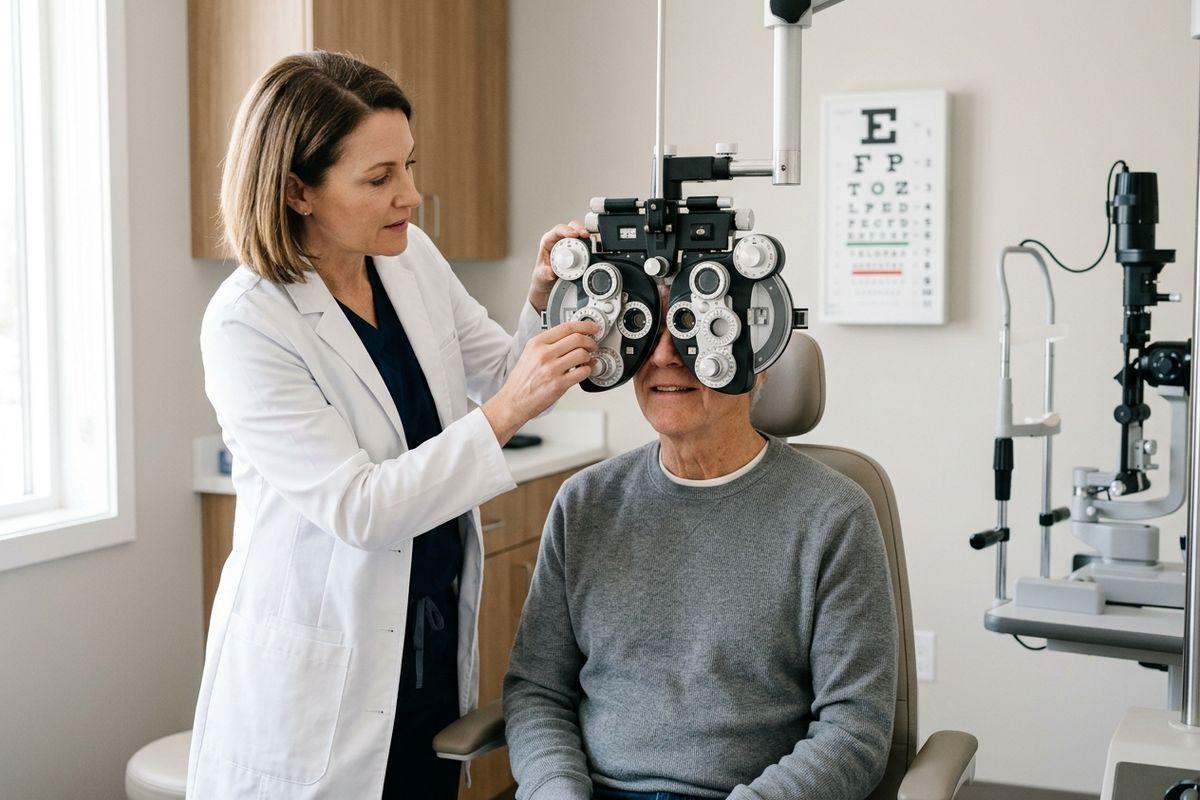
Your optometrist can examine the surface of your eye, review your habits, and rule out the causes that need specific treatment. A dry eye evaluation measures your tear quality and looks at the glands along your lid margin.
From there, you’ll leave with a plan built around what’s actually driving your symptoms. That might mean prescription drops, in-office dry eye therapy, or lenses made for computer work.
Give Your Eyes the Break They’re Asking For
A twitchy eyelid usually signals fatigue, so treat it as a nudge to rest, hydrate, and step away from the screen more often. If the flutter keeps returning, bring it up rather than waiting it out.
The team at West Shore Eye Care takes time to listen and to explain what they find. Book your appointment and get some comfort back into your day with care made for you.